
Ultra-safe lithium iron phosphate technology that passes the nail penetration test - setting new standards for EV battery safety.
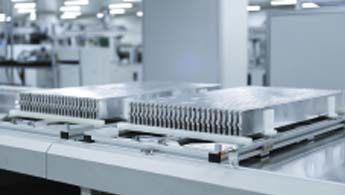
The Blade Battery represents a breakthrough in EV battery technology. Its unique cell-to-pack design and lithium iron phosphate chemistry deliver exceptional safety without compromising performance.
Unlike traditional batteries, the Blade Battery passes the nail penetration test without fire or explosion - a feat that sets it apart from all other battery technologies.
Industry-leading safety, performance, and longevity in one revolutionary package.
Passes nail penetration test without fire or smoke - the strictest safety test in the industry.
Cell-to-pack technology maximizes space efficiency for greater range per charge.
Over 1 million kilometers of battery life with minimal degradation over time.
Excellent performance across all temperature ranges from -20°C to 60°C.
Supports rapid charging capabilities for minimal downtime and maximum convenience.
Lower total cost of ownership with reduced maintenance and longer lifespan.
Understanding the key differences between BYD's LFP technology and Tesla's NMC/NCA approach.
Get answers to the most common questions about BYD's revolutionary battery technology.
The BYD Blade Battery is a revolutionary lithium iron phosphate (LFP) battery that uses a unique cell-to-pack design. It eliminates traditional module structures, increasing space utilization by 50% while providing exceptional safety. The Blade Battery passes the nail penetration test without fire or explosion - a feat no other EV battery can achieve.
BYD Blade Battery uses LFP chemistry while Tesla 4680 uses NMC/NCA. Key differences: Blade Battery has superior safety (passes nail penetration test), longer lifespan (1M+ km vs 500K km), no cobalt (more ethical sourcing), but slightly lower energy density. Tesla 4680 offers higher energy density but with thermal runaway risks and cobalt dependency.
The BYD Blade Battery is designed to last over 1 million kilometers (620,000+ miles) with minimal degradation. This exceptional longevity comes from the inherent stability of LFP chemistry, which experiences less stress during charge cycles compared to NMC batteries.
Yes, the Blade Battery is significantly safer. It is the only EV battery to pass the nail penetration test - the most rigorous battery safety test - without fire, smoke, or explosion. The LFP chemistry is inherently more thermally stable, virtually eliminating thermal runaway risk.
The nail penetration test is the strictest battery safety test where a steel nail is driven through a fully charged battery cell. Traditional lithium-ion batteries typically catch fire or explode. BYD's Blade Battery passes this test with no fire, no smoke, and surface temperature reaching only 30-60°C, demonstrating exceptional safety.
Yes, BYD's latest Blade Battery technology supports ultra-fast charging. With BYD's Super e-Platform featuring 1,000kW charging capability, vehicles can gain up to 400km of range in just 5 minutes. Standard Blade Batteries support 80kW-150kW DC fast charging.
All BYD passenger vehicles use Blade Battery technology, including the BYD Han, Tang, ATTO 3, Seal, Dolphin, and Seagull. The technology is also used in commercial vehicles, buses, and is being supplied to other automakers like Toyota and Ford.
The Blade Battery is the only battery technology to pass the nail penetration test without fire or explosion, setting a new benchmark for EV safety.
No fire, no smoke, no explosion - just safety
See how BYD's revolutionary battery technology is powering the future of electric mobility.
Explore BYD Vehicles